Will choosing “vegetable gimbap” or bibimbap solve vegetarian dining during a trip to Korea? A dish’s name and visible vegetables are not enough to tell. Public travel communities also contain questions about finding vegetarian restaurants and checking broth or kimchi ingredients. Prepare both a restaurant shortlist and a way to check the actual dish before ordering.
This article draws on Korea Tourism Organization’s vegetarian travel guidance, checked on November 27, 2026. It does not guarantee that a particular restaurant currently operates or that its entire menu is vegan. Community discussions helped identify readers’ questions; official tourism guidance supports the ingredient-checking principles.
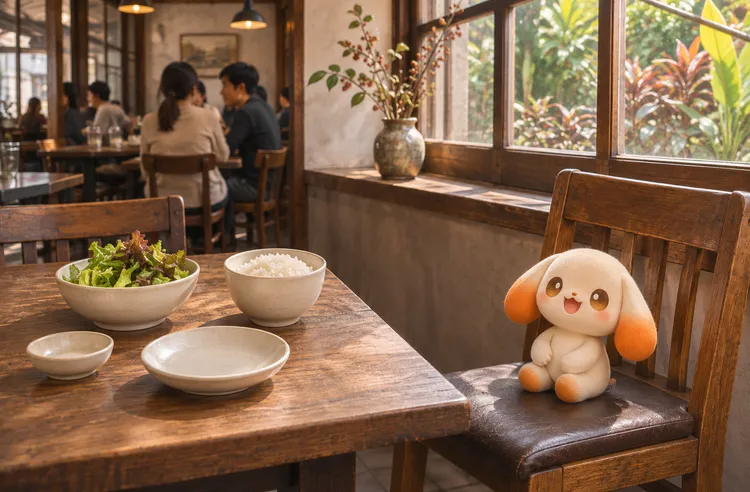
The cover and article images depict generic Korean meals, market walks and café breaks, generated with AI and composited with Roro. They are reference illustrations, not verified photographs of actual restaurants or food ingredients, nor vegan certification marks.
Specify ingredients you avoid, beyond saying “vegetarian”
Someone who avoids meat but eats eggs and dairy has different requirements from someone who eats fish or excludes all animal ingredients. Establish your own criteria with your companions first. At a restaurant, go beyond asking whether a vegetarian option exists and explain which ingredients need to be excluded.
Prepare statements suited to your diet, such as “I don’t eat meat, fish or seafood” or “I also don’t eat eggs, milk or cheese.” If using a translation app, save the wording before your visit, show it to staff and confirm whether they can accommodate it. If understanding is uncertain, do not simply ask for the toppings to be removed.

Check hidden ingredients in broth, kimchi and gimbap
Korea Tourism Organization notes that many dishes use meat or fish broth, and advises explaining excluded ingredients specifically before ordering. Removing visible pieces of meat is different from preparing a dish without animal-based stock from the start. Ask about the broth itself: “Does the stock contain meat or anchovies?”
Vegetable gimbap may include ham, egg or imitation crab, depending on the restaurant. Check whether bibimbap includes meat and egg toppings and whether they can be omitted. Ask whether kimchi contains seafood ingredients such as fermented seafood or fish sauce. Do not assume every restaurant uses the same recipe for a named dish.
Break ordering questions into short steps
If a long explanation is difficult, ask separately: “Does this dish contain meat or seafood?”, “Is it also in the broth or sauce?” and “Can it be made without eggs and dairy?” Select the questions relevant to your diet, and confirm the answers before cooking begins.
Dishes made with prepared stock or seasoning may not allow individual ingredients to be removed. Leave time to choose another dish or restaurant if staff cannot confirm a suitable preparation. This is about checking whether their explanation meets your dietary needs, rather than assuming the same substitution is possible for everyone.

Shortlist restaurants, then recheck your visit-date details
Use official tourism guidance alongside restaurants’ current menus to find vegetarian, vegan or temple-food options. Do not assume every temple-food restaurant or dish meets the same dietary standard; recheck ingredients you avoid, including dairy. Avoid putting old opening hours or prices from recommendation articles straight into your itinerary.
For packaged food, you can also look for vegan certification marks. Dietary choices and food-allergy precautions are different matters: if you have an allergy, separately check the ingredients and cross-contact concerns relevant to it. Having two or three meal options in advance makes it easier to change plans locally.